 FabFilter Pro-Q4
FabFilter Pro-Q4
FabFilter Pro-Q4
Timbre is the tone, colour or quality of a sound. It is what makes it possible to tell the difference between two instruments playing the same pitch at the same amplitude. It is the thing that allows us to differentiate between an acoustic guitar and an electric guitar, or even between two different models of electric guitar. Timbre helps us to understand and describe how a sound gets its individual character, which makes it a very important thing to understand in audio production. Timbre is multidimensional and is comprised of two major elements: envelope and frequency spectrum. Let's take a look at each of these on their own.
Envelope Envelope describes how a sound’s amplitude changes over time. Envelope can be further divided into four stages, which relate to how a note is produced on an instrument. The four stages are attack, decay, sustain and release. Attack: the time from when a note is first played to when it reaches its peak amplitude Decay: the time it takes to go from the peak amplitude of a note to a level of relatively consistent amplitude Sustain: the amount of time that the amplitude stays relatively consistent Release: the time it takes for a note to transition from a level of relatively consistent amplitude to silence When they are more pronounced, the attack and decay phases together form the transient: a sudden excursion of amplitude which often correlates to the pluck of a string or strike of a musical instrument.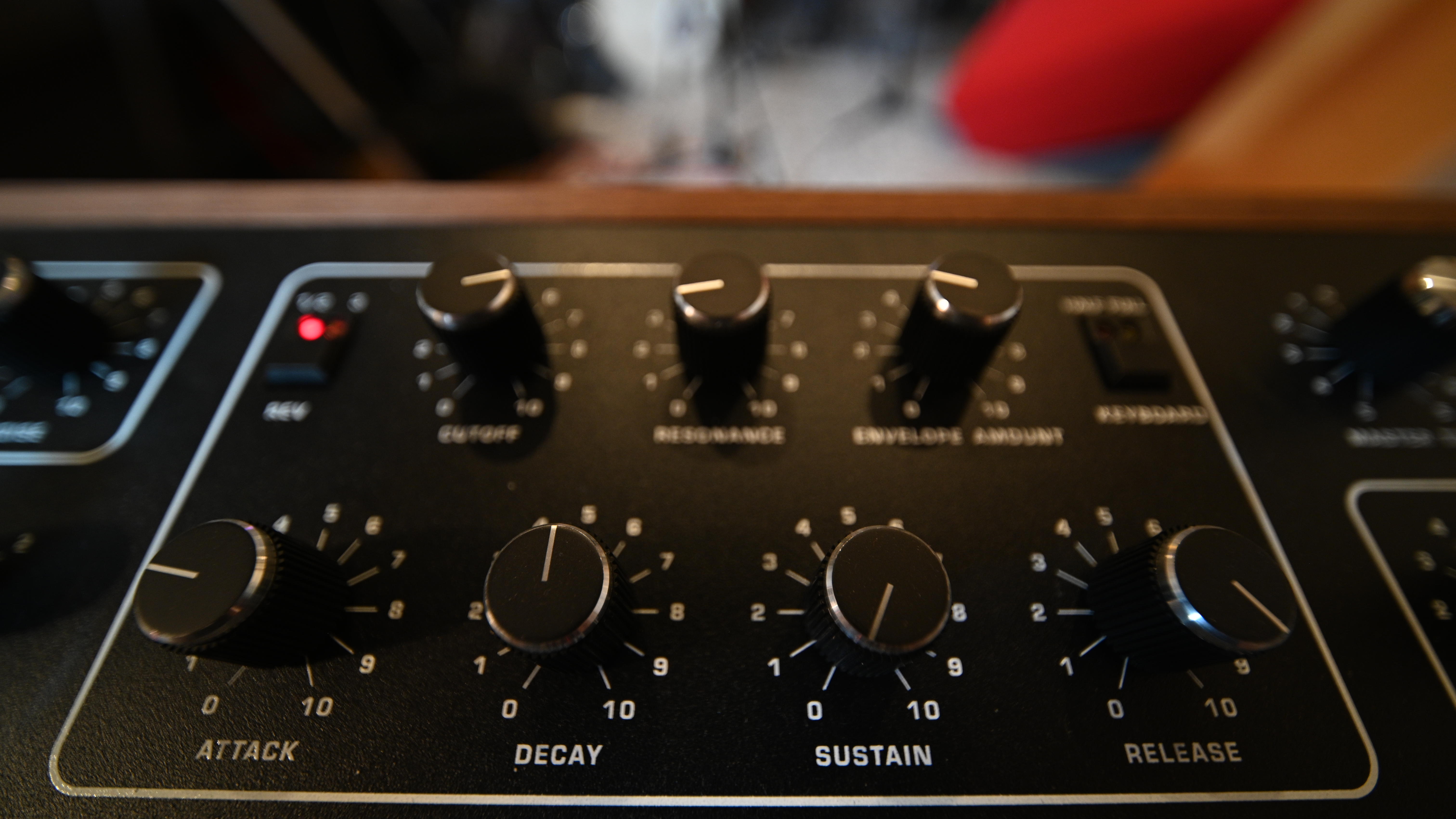 Different musical instruments produce different envelopes and some have more control over others in terms of manipulating envelope. For instance, an acoustic piano can’t do much to change its attack and decay times, but the player can easily control the sustain time with the sustain pedal. Bowed string instruments on the other hand have a great amount of control over each of the four stages of envelope. A synthesizer will often allow the user to create an envelope from scratch by defining times for the above stages (often abbreviated to ADSR). In the case of a synthesizer, the user may be able to control the sustain by holding down a key, in which case the sustain control will affect amplitude during the sustain phase.
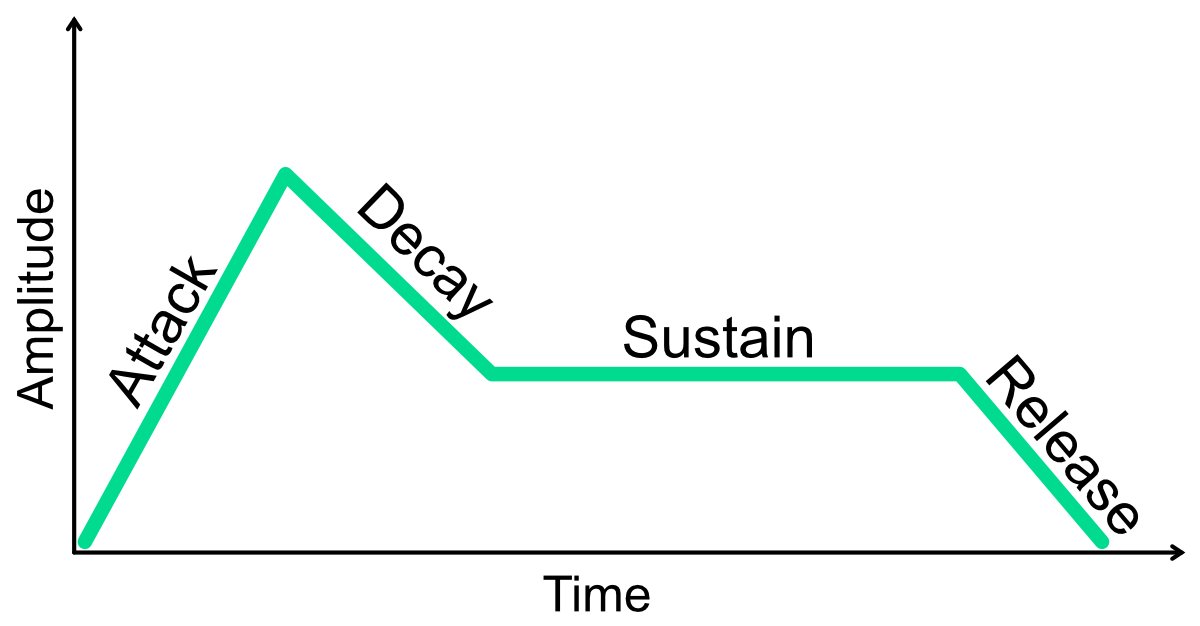 Attack, Decay, Sustain and Release phases or ADSR
Spectrum is equally important to a sound’s character and describes the frequency component. Most of the time, when a musical instrument plays a note it produces a complex spectrum of frequencies consisting of the fundamental pitch played as well as many others. We categorize these pitches as being one of the following:
Fundamental frequency: this pitch corresponds to the note played and is often the lowest frequency in an instrument’s spectrum
Overtones: Overtones are frequencies above the fundamental which make up the rest of a sound’s spectrum. We describe overtones as being either harmonics or inharmonic overtones.
Harmonics are frequencies which are whole number multiples of the fundamental frequency. For example, if the fundamental frequency is 100Hz, you could have harmonics at 200Hz, 300Hz, 400Hz, etc.
Inharmonic Overtones are the frequencies within an instrument's spectrum which do not relate harmonically to the fundamental. These can be produced by resonant aspects of the instrument's construction (such as a hollow body or soundboard), or the mechanical/percussive components of an instrument which produce the sound (such as plucking a string or striking a cymbal).
All of these individual frequencies come together at different amplitudes to produce a complex spectrum unique to that specific instrument. It is also important to consider that the spectrum of an instrument usually changes across the duration of its envelope.
Take for example an acoustic guitar. The inharmonic overtones produced by plucking a string are more present during the attack and decay phases, but will die off relatively quickly thereafter leaving the harmonic content produced by the strings ringing out during the sustain and release phases.
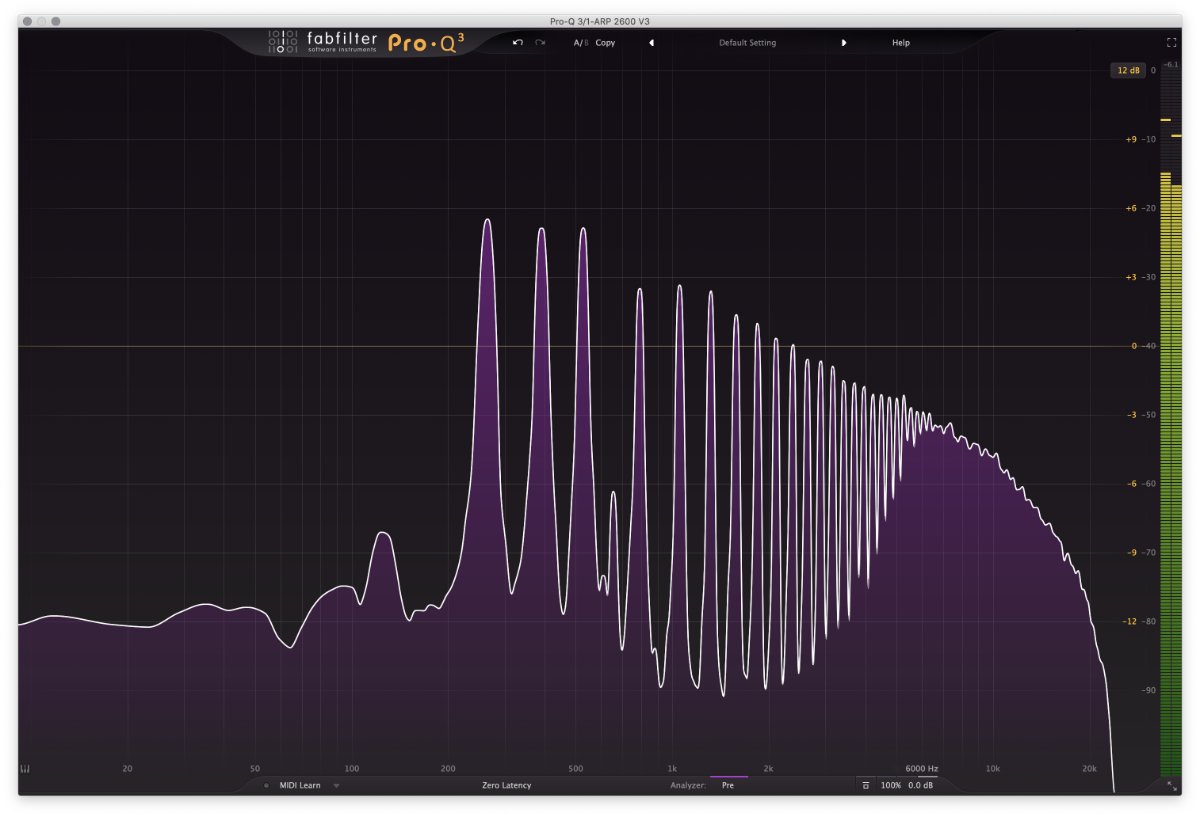 FabFilter Pro-Q 3's Spectrum Grab feature is a great way to freeze a complex spectrum in time, making it easier to observe.